Missing teeth change more than your smile. They can make chewing less predictable, let neighboring teeth drift over time, and leave one side of the mouth doing a little too much of the work. The good news is that there are several ways to restore the space, and a dental bridge is one of the classic options.
If you are trying to understand the basics before you book a visit, this guide keeps it simple: what bridges do, what the appointment process usually looks like, and what to ask when you are comparing a bridge with other choices. For a broader look at restorative care, see our services page and contact us if you would like to share what is happening and ask about the next step.
Why missing teeth matter
A missing tooth does not just leave a gap. It can affect how food is chewed, how speech feels, and how comfortably the bite comes together. Over time, nearby teeth may tip or shift into the open space. That does not happen overnight, but it is one reason dentists often recommend not leaving the area unaddressed for too long.
The American Dental Association has a plain-language overview of missing teeth and replacement options if you want a broader reference point: ADA: Missing Teeth.
What a bridge is
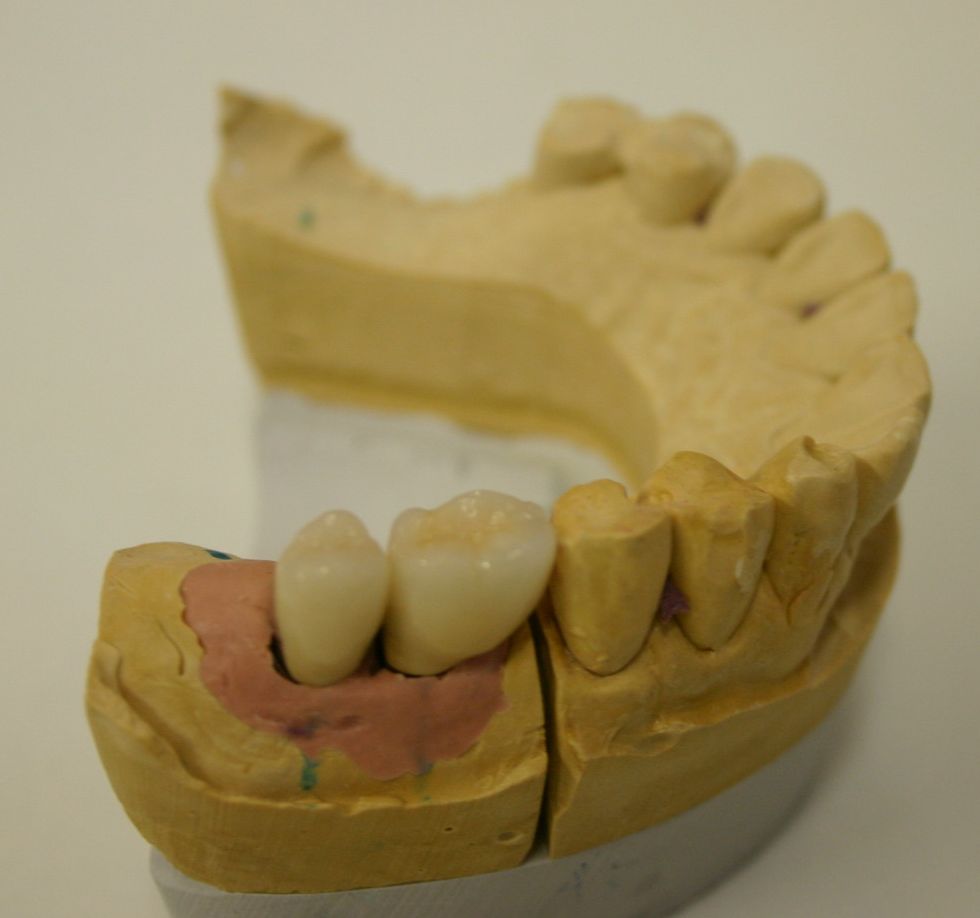
A dental bridge is a fixed restoration that fills the space left by one or more missing teeth. In simple terms, it uses the teeth on either side of the gap as support and places an artificial tooth, or teeth, in between. The goal is to restore function and appearance without leaving the space open.
The phrase people usually remember is this: a bridge spans the gap. It is not removable like a partial denture, and it is not an implant placed directly into the jawbone. It sits in the middle of those two ideas.
For an overview of the parts and common bridge styles, the Cleveland Clinic has a helpful explainer: Cleveland Clinic: Dental Bridges.
Types of bridges at a high level
Your dentist may talk about a few different bridge designs. You do not need to memorize the vocabulary first; it is enough to know that the design depends on where the gap is, which teeth are available for support, and how the bite needs to function.
- Traditional bridge: supported by crowns on the teeth beside the gap.
- Cantilever bridge: supported on one side only in selected cases.
- Maryland bridge: uses a framework bonded behind nearby teeth in some situations.
- Implant-supported bridge: anchored to implants rather than natural teeth.
The right choice is not “whatever is most popular.” It is the one that fits your teeth, your bite, and the long-term plan for that area.
The typical appointment sequence
Most bridge treatment follows a familiar sequence, though the details vary by case:
- Exam and planning: your dentist checks the teeth, gums, and bite and talks through options.
- Preparation: if a traditional bridge is chosen, the supporting teeth are shaped so crowns can fit properly.
- Impressions or digital scans: these records help create a bridge that fits the space and bite.
- Temporary restoration: you may leave with a temporary solution while the final bridge is made.
- Placement: the final bridge is tried in, adjusted, and then cemented or secured.
- Follow-up: your dentist checks the bite and comfort after you have used it for a while.
If you want to understand how dentists explain restorative workflows more broadly, the National Institute of Dental and Craniofacial Research keeps patient education pages on tooth replacement and oral health: NIDCR: Missing Teeth.
Caring for a bridge day to day
A bridge usually needs the same steady care you would give any other part of the mouth, plus a little extra attention around the edges. We recommend thinking in terms of routine rather than special effort.
- Brush twice a day with fluoride toothpaste.
- Clean carefully around and under the bridge with floss threaders, super floss, or other tools your dentist suggests.
- Keep up with regular exams and cleanings.
- Pay attention to changes in fit, biting pressure, or sensitivity.
The American Dental Hygienists’ Association has practical guidance on cleaning between teeth and around restorative work: ADHA: Clean Between Teeth.
Signs you should schedule a check-up
Not every odd sensation means something is wrong, but a few changes are worth a call:
- the bridge feels loose or moves
- food is packing around it more than usual
- you notice new pain, pressure, or sensitivity in nearby teeth
- your bite feels different
- the gums around the area look irritated or keep bleeding
If something feels “off,” that is often the right time to ask before it becomes harder to sort out. Calm questions are useful here; the mouth prefers them.
Bridge vs. implant: questions to ask
Many readers want a simple answer here, and the honest one is that there is not a universal winner. A bridge and an implant solve the same general problem in different ways.
Useful questions to ask include:
- What is the condition of the teeth next to the gap?
- Is bone support enough to consider an implant?
- How long would treatment take in my situation?
- What maintenance does each option require?
- What matters most for this tooth: strength, appearance, or preserving nearby teeth?
For a neutral comparison of the two approaches, Mayo Clinic’s dental implant information is a good companion reference: Mayo Clinic: Dental implants.
A practical next step
If you are missing a tooth and want to know whether a bridge makes sense, the best next step is usually a conversation built around your specific bite and oral health. Bring your questions, mention any changes you have noticed, and ask what the dentist sees as the long-term plan. That is often where the useful clarity lives.
Contact our office if you would like to start that conversation or simply gather a little more context before deciding.