Bridges, Crowns, and Implants: A Quick Guide to Restorative Options
If you are trying to sort out bridges, crowns, and implants, the useful question is not which one sounds most advanced. It is which one fits the tooth, the timeline, and the amount of maintenance you are willing to live with.
People usually arrive at restorative care with the same practical questions: What problem is this treatment solving? How involved is the process? How long does it last? And what do I need to do afterward so the result does not become a new problem? Those are the right questions. Restorative dentistry works best when it is treated as a decision, not a sales pitch.
For a plain-language starting point, the ADA’s patient pages on bridges, crowns, and implants all point to the same idea: these treatments solve different problems, even when they seem to overlap on a treatment menu. The broader missing teeth guide is also useful when you want to understand why restoring function early matters. If you are trying to map the options that this practice discusses, the Our Services page is the cleanest place to start.
When we consider restorative care
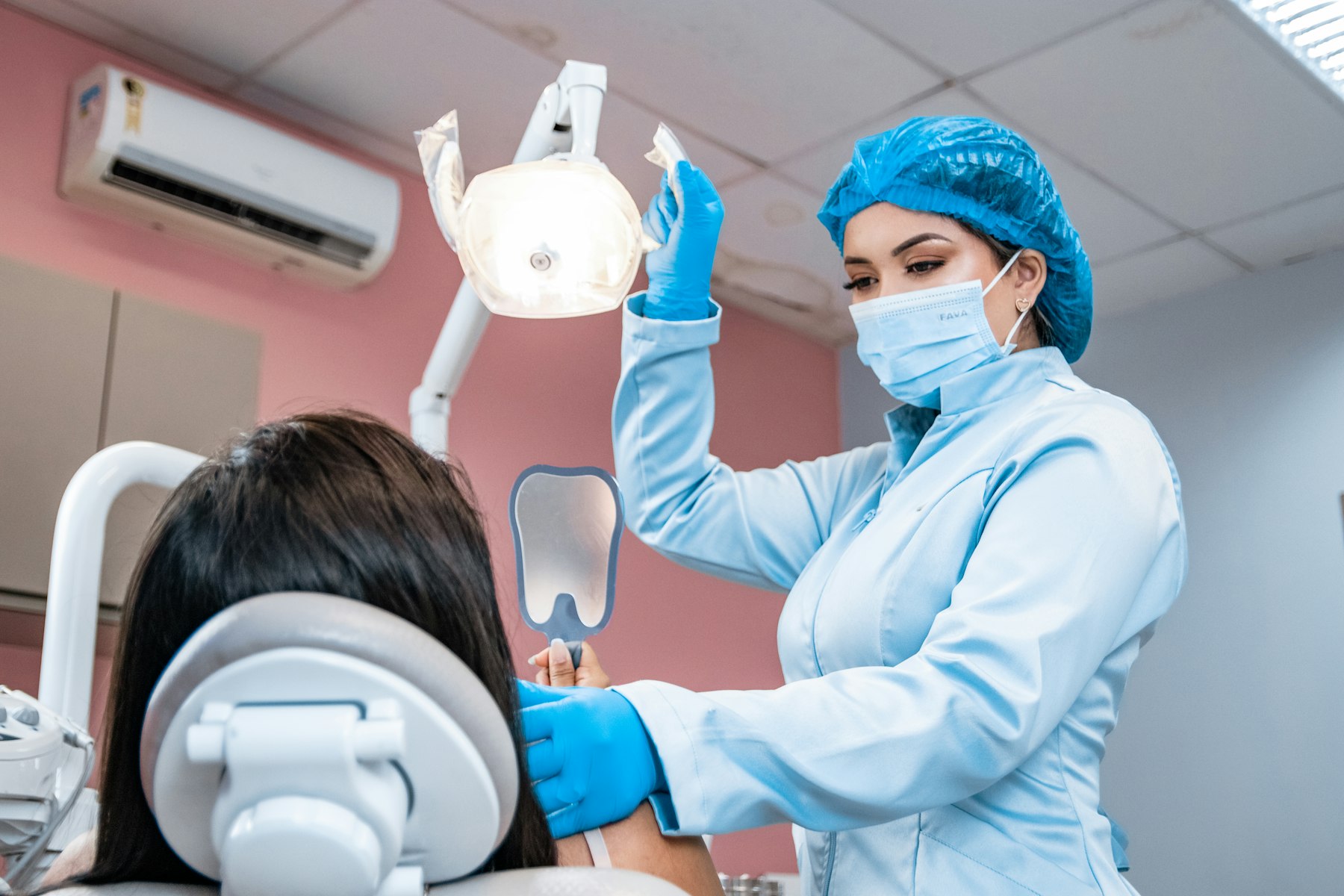
Restorative care is the part of dentistry focused on repairing, replacing, or strengthening teeth so they can do their job again. That job is simple in theory and picky in practice: chew, speak, smile, and hold up under daily use.
Common reasons people need restorative work include decay, cracks, wear, a large old filling that has reached its limit, or a missing tooth that needs replacement. Sometimes the goal is protection. Sometimes it is support. Sometimes it is both. A crown protects a tooth that still exists. A bridge replaces one or more missing teeth by using neighboring teeth as support. An implant replaces the root support and gives the final restoration its own foundation.
That distinction matters because the treatment is chosen around the problem, not the other way around. If the tooth is still present but weakened, a crown may be the right conversation. If a tooth is missing and the surrounding teeth can help support the restoration, a bridge may make sense. If the missing tooth needs a standalone foundation, an implant may be the better fit.
In practice, the decision is usually about three things:
- What is missing or damaged?
- What support is available around it?
- How much time, maintenance, and cost are you planning for?
That is the structure. The rest is detail.
Bridges: purpose and general process
A dental bridge replaces one or more missing teeth by spanning the space between neighboring teeth or other support points. In simple terms, the bridge “bridges” the gap. It is a fixed restoration, which means you do not remove it for cleaning the way you would with a denture.
The ADA’s bridges overview is a good reminder that bridges can be useful when the teeth next to the gap are healthy enough to support the restoration. That support is the whole system. If the surrounding teeth are not a good fit, the bridge is less attractive. Biology has a way of rejecting elegant shortcuts.
Typical bridge sequence:
- Exam and planning to confirm the area can support a bridge.
- Preparation of the supporting teeth, if needed.
- Impressions or scans for the final restoration.
- Placement of a temporary restoration in some cases.
- Delivery and adjustment of the final bridge.
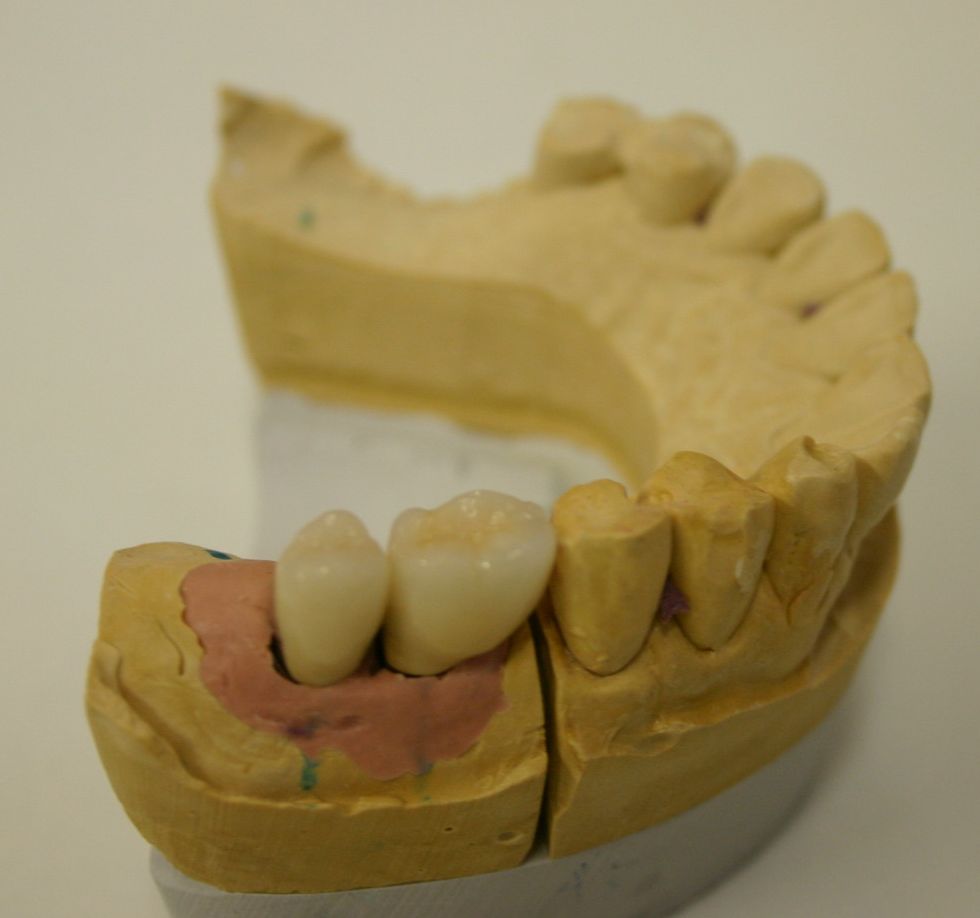
Benefits of bridges:
- They are fixed in place, so they can feel more stable than removable options.
- They restore chewing and appearance without requiring implant surgery for the replacement itself.
- They can be a practical option when nearby teeth already need crowns or repairs.
Drawbacks of bridges:
- They depend on neighboring teeth for support.
- The supporting teeth may need to be prepared even if they are not the main problem.
- Cleaning under and around the bridge takes some technique and consistency.
My practical rule is simple: bridges are most attractive when the nearby teeth are already part of the discussion. If the bridge has to borrow too much from otherwise healthy teeth, the tradeoff deserves a closer look.
Crowns: purpose and general process
A dental crown covers and protects a tooth that is still there but needs reinforcement. Think of it as a custom cap that restores shape, strength, and function. Crowns do not replace a missing tooth on their own. They restore the tooth you still have.
The ADA’s crowns page explains the basic use case well: crowns are often discussed when a tooth is cracked, heavily worn, weakened by decay, or has a large filling that no longer leaves enough healthy structure. Crowns are a protection strategy. The tooth is still in the game; it just needs a better helmet.
Typical crown sequence:
- Evaluation of the tooth and surrounding bite.
- Removal of decay or old restorative material, if needed.
- Shaping the tooth so the crown can fit securely.
- Digital scan or impression for the lab or milling process.
- Temporary crown in some cases, then final placement.
Pros of crowns:
- They protect and strengthen an existing tooth.
- They can restore function and appearance at the same time.
- They are familiar, widely used, and often the most direct answer when a tooth is still salvageable.
Cons of crowns:
- They require enough healthy tooth structure to work well.
- They do not solve the problem of a missing tooth by themselves.
- They still need care, regular exams, and good hygiene around the margins.
Crowns are a good example of how restorative dentistry is not about drama. A crown is not trying to become a new tooth. It is trying to keep a damaged one useful for as long as reasonable. That is often the more honest goal.
Implants: purpose and general process
A dental implant replaces the root support for a missing tooth. In most cases, the implant is a small post placed in the jawbone, and a restoration such as a crown, bridge, or denture component is built on top of it later. The implant itself is the foundation.
The ADA’s implants overview and the broader missing teeth guidance both point toward the same practical reality: implants are often chosen when a patient wants a more standalone, fixed solution and the anatomy supports it. They are not a shortcut. They are a staged plan.
Typical implant sequence:
- Consultation, records, and planning.
- Placement of the implant post, if the case is appropriate.
- Healing time so the implant can integrate with the bone.
- Placement of the final crown, bridge, or other restoration.
- Regular maintenance and follow-up care.
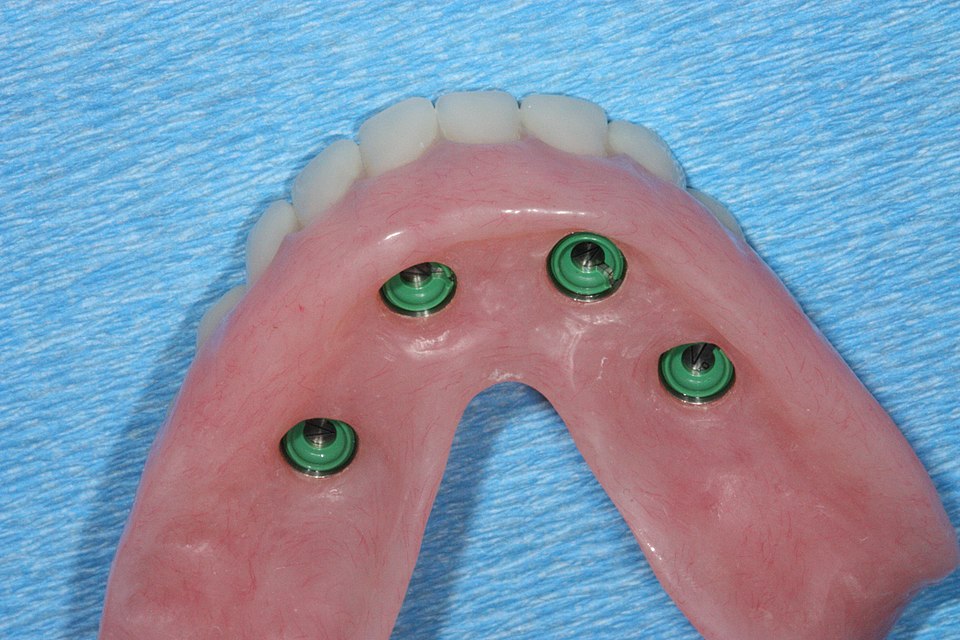
Benefits of implants:
- They provide a standalone foundation for a replacement tooth or teeth.
- They can feel more like a fixed solution once restored.
- They do not rely on neighboring natural teeth the way some bridges do.
Potential challenges of implants:
- They usually take more time because healing is part of the plan.
- They require enough bone and gum support to be considered responsibly.
- They still need ongoing hygiene and maintenance. Implants are not maintenance-free. They are just maintained at a different address.
When patients ask whether implants are “better,” I usually translate the question into something more useful: Are they the best fit for this anatomy, this timeline, and this maintenance pattern? That is the real decision.
How we compare the options
A side-by-side table usually does a better job than a long speech. It makes the tradeoffs visible instead of decorative.
| Category | Bridge | Crown | Implant |
|---|---|---|---|
| Main purpose | Replace one or more missing teeth | Protect and restore a damaged tooth | Replace the root support for a missing tooth |
| What it depends on | Nearby support teeth or anchors | The remaining tooth structure | Bone and tissue support for placement and healing |
| Typical timeline | Often moderate | Often relatively direct | Usually longer because of healing |
| Daily maintenance | Careful cleaning around the bridge | Brush and clean around the crown margin | Brush, floss, and maintain the surrounding tissue |
| Common strength | Fixed replacement without implant surgery | Protects a tooth that can still be saved | Creates a standalone foundation |
| Common watch-out | Depends on nearby teeth | Does not replace a missing tooth by itself | Needs planning, healing, and support |
That table is the clean version. The practical version is even simpler: a crown saves a tooth, a bridge replaces a gap, and an implant creates a new support system. If you remember that sentence, you have the framework. The details are what your dentist uses to test whether the framework actually fits your mouth.
How we decide between options
The right restorative choice depends on more than the name of the treatment. It depends on constraints. Useful decisions always do.
1. Cost considerations
You do not need exact numbers to ask a useful cost question. Ask what is included, what may be separate, and what maintenance could look like later. A lower upfront cost is not automatically the lower total cost. A more expensive option is not automatically overkill. The only honest answer is the one tied to the actual plan.
2. Longevity and durability
Some patients want the most conservative repair that protects the tooth they still have. Others want the most durable long-term structure they can reasonably support. Longevity matters, but so does the amount of upkeep the option expects from you. If the plan is too complicated to maintain, it is not really a plan.
3. Oral health and support
The condition of the gums, bone, neighboring teeth, and bite can shift the recommendation. That is not a failure of the treatment. It is the treatment responding to reality. If a bridge would place too much demand on adjacent teeth, or if the tooth is too damaged for a crown, or if implant support is not strong enough yet, the sequence changes.
4. Timeline and tolerance for steps
Some people want the fastest workable path. Others prefer a slower treatment that may offer more independence later. Implants usually ask for more time. Crowns and bridges often move faster. The best choice depends on how much sequence your calendar and patience can handle.
5. Personal preferences
This part gets underestimated. Some patients prefer a fixed restoration. Some are comfortable with a bridge if the support teeth are already part of the plan. Some want to protect an existing tooth and avoid replacing it unless necessary. These preferences are valid because they affect daily life, not because they sound impressive in a brochure.
If you want the broad service map before you compare specifics, the Our Services page can help frame the conversation. If you are already leaning toward a visit, the Contact Us page is the shortest path to a consultation.
Questions to ask in your consult
Good consultations are built on good questions. I would bring a short list and ask it in plain language.
- What problem is this treatment solving in my case?
- Why are you recommending a bridge, crown, or implant here?
- What would make one option a poor fit for me?
- What records or imaging do you need before you can decide?
- What does the appointment sequence usually look like?
- How much healing or adjustment time should I expect?
- What does daily cleaning look like afterward?
- What are the main maintenance issues to watch for over time?
- If I am not ready for the full treatment now, what is the safe short-term path?
- What should make me call back sooner rather than later?
One question I like because it reveals the reasoning without turning the visit into a debate is: “If this were your tooth, what would you compare before deciding?” A good clinician should be able to answer that without theatrics.
If you want to keep the conversation going in writing first, the Send Us an Email page is a simple way to describe what you are trying to solve before the appointment.
Next steps: scheduling and planning
Once you understand the differences, the next move is not to guess harder. It is to schedule the consult that can turn general information into a case-specific plan.
For practices that also want to organize intake, reminders, and follow-up around restorative care, outside guidance such as AI consulting services can help map the workflow before any automation is added.
Bring a short list of your priorities: appearance, chewing, comfort, speed, and maintenance. Bring any recent dental history you have if it is available. If you already know where the concern is, say that directly. The more specific the starting point, the easier it is to compare options cleanly.
Then let the exam do its job. Restorative dentistry is not a quiz with one correct answer. It is a matching problem. The question is which structure fits the tooth, the support around it, and the amount of upkeep you are realistically going to do.
That is why I would keep the decision simple:
- Choose a crown when the tooth is still there and needs protection or reinforcement.
- Choose a bridge when you need to replace a missing tooth or span a gap with fixed support.
- Choose an implant when you want a standalone foundation and the anatomy supports the staged plan.
Bottom line: the best option is the one that solves the right problem with the least unnecessary compromise. If you want help translating that into a real treatment conversation, start with Contact Us or Send Us an Email. A clear first step is usually enough to turn the whole topic from abstract to manageable.
Key takeaways
- Restorative dentistry is about repairing or replacing teeth so they can function normally again.
- Crowns protect and strengthen a tooth that is still present.
- Bridges replace missing teeth by using support from neighboring teeth or anchors.
- Implants replace the tooth root support and give the final restoration its own foundation.
- The choice depends on support, timing, maintenance, cost, and your personal comfort with each path.
- A consultation is the right place to turn the general comparison into a specific recommendation.