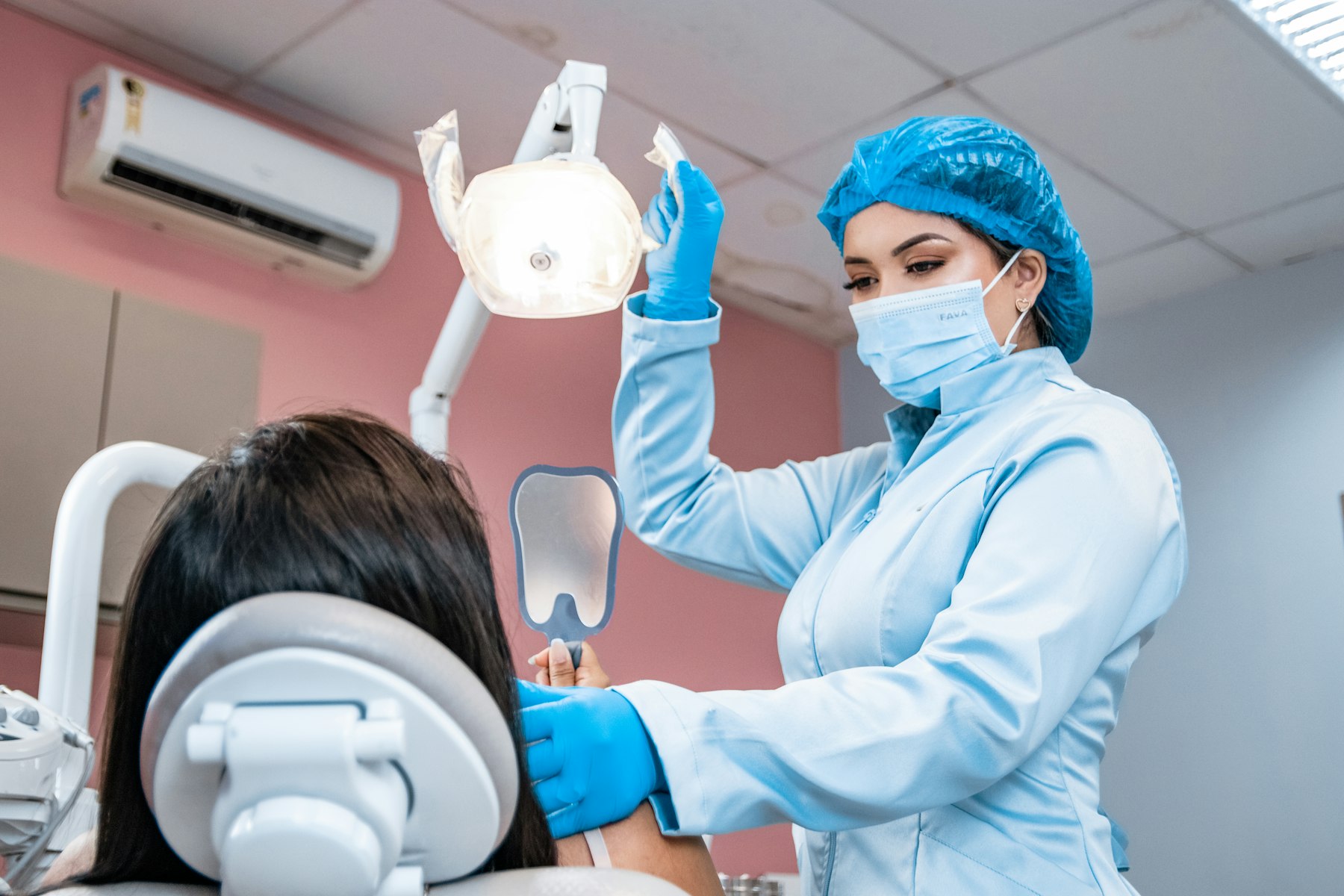
Why dental anxiety is common
If you feel tense before a dental visit, congratulations: you are a normal human with a working nervous system. Dental anxiety is common, and the fix is not pretending it is dramatic or silly. The practical goal is simpler: lower the friction, keep the visit predictable, and give yourself a few control points.
Current guidance from NHS England emphasizes communication, pacing, and treatment plans that do not steamroll the patient. The American Dental Association also notes that many people feel some level of anxiety and that simple breathing techniques can help in the chair. ADA guidance on meeting the doctor is basically the same point in cleaner language.
For a local practice context, the important part is not whether you are “brave enough.” It is whether the office listens, explains, and slows down when needed. If that is missing, the problem is not your personality. It is the process.

What to do before the appointment
- Sleep if you can. Exhaustion makes everything louder, including worry.
- Eat something sensible. Showing up hungry and shaky is a self-inflicted complication.
- Pick a manageable time. A morning slot can help if waiting all day makes you spiral.
- Reduce the unknowns. Confirm the address, parking, and expected length of the visit ahead of time.
- Bring a distraction. Music, a podcast, or headphones can blunt the room’s noise.
If you want a broader primer on preparing for care, the ADA’s patient education on seeing the dentist is a sensible place to sanity-check expectations.
How to tell the dental team what you need
Do not wait until you are already white-knuckling the armrest. Say it early, in plain language. A competent team can work with that.
- Tell them you are anxious before the appointment starts.
- Ask for a signal if you need the team to pause.
- Request step-by-step explanations before anything begins.
- Ask whether the visit can be broken into smaller stages.
- Confirm whether longer appointments are possible if you need extra time.
That is not being difficult. That is giving the office the information it needs to avoid guessing. Guessing is how simple visits become miserable.
If you are choosing a practice, use the conversation itself as the test. A team that answers calmly and clearly before you arrive is usually better behaved once you are in the chair. If you want a local starting point, see the Contact Us page or learn more about Dr. Christopher on the About page.
In-the-chair coping tools that actually help
No magic. No heroic mindset. Just mechanics.
| Tool | How to use it | Why it helps |
|---|---|---|
| Slow breathing | Inhale through the nose for a count of four, exhale for a count of six | It lowers the body’s “something bad is happening” signal |
| Grounding | Notice five things you can see, four you can feel, three you can hear | Pulls attention away from the loop in your head |
| Muscle release | Deliberately relax your shoulders, hands, and jaw between steps | Stops the body from pretending it is under siege |
| Pause requests | Use your agreed signal when you need a break | Restores control without derailing the appointment |
For patients who want a deeper psychological support pathway, Guy’s and St Thomas’ NHS describes CBT-based help and self-help work for very strong dental fear. Read more at their dental anxiety support page. That is not a substitute for dentistry; it is a structured way to reduce the panic response around it.
When a dentist may suggest staged care or sedation options
Sometimes the smartest plan is not “do everything today.” It is “do the first necessary step without making the patient hate the next three months.” NHS guidance supports staged treatment, longer visits, and communication tools when anxiety is a major barrier. In some cases, a dentist may also discuss sedation pathways as part of a broader plan. That is a dentist-led conversation, not a do-it-yourself project.
For a local practice, the right question is simple: does the team have a plan for anxious patients, or just a poster that says “relax” in cheerful font? One of those is a plan. The other is wall decor.
How to choose a practice that takes anxiety seriously
- They answer questions without sounding rushed.
- They explain what will happen before they start.
- They are willing to pause, stage treatment, or book longer visits when needed.
- They talk about comfort in concrete terms, not slogans.
- They make it easy to reach the office if you need clarification afterward.
That last point matters. Good communication before the visit predicts better communication during the visit. Humans remain surprisingly consistent when you stop hoping they will improvise.
A short checklist before your next visit
- Confirm the appointment time and location.
- Eat, hydrate, and avoid showing up rattled and empty.
- Write down your questions before the appointment.
- Tell the team you are anxious as soon as you arrive.
- Agree on a hand signal or stop signal.
- Use slow breathing the moment your body starts escalating.
- Ask whether the treatment can be staged if needed.
For routine services and preventive care, you can also review the practice’s 1-Hour Teeth Whitening service page if cosmetic treatment is part of your questions. If you are ready to start the conversation, use the contact page or the blog for more patient-friendly guidance.
Bottom line
Dental anxiety is common. It is also manageable when the office does the boring, effective things: clear communication, pacing, control, and a plan that respects the patient’s nervous system instead of pretending it does not exist. That is usually the real treatment. The procedure is just the part with instruments.