Dental Implants vs. Dentures: How to Compare Options
If you are trying to choose between implants and dentures, the real question is not “which one is better?” It is “which one fits the way I live, eat, speak, and plan?”
People usually come to this comparison with a short list of very practical questions: Which option feels more stable? Which one is easier to clean? Which one changes the way I eat? And how much planning do I need before I can move forward? That is the right way to look at it. A good decision here is not about hype. It is about fit.
The American Dental Association’s patient guides on implants and dentures, along with the Mayo Clinic’s overview of dental implant surgery, point to the same practical truth: these options solve different versions of the missing-teeth problem. Implants are typically the more fixed, root-like solution. Dentures are the removable version. Neither is a toy, and neither is automatically right for every mouth.
In this guide, I’ll break down what each option is meant to solve, compare the day-to-day tradeoffs, and lay out the questions that help a dentist tailor the recommendation to your situation. If you want to see how this fits into the rest of the practice’s care paths, start with the Our Services page. If you already know you want a conversation, the Contact Us page is the shortest route.
What each option aims to solve
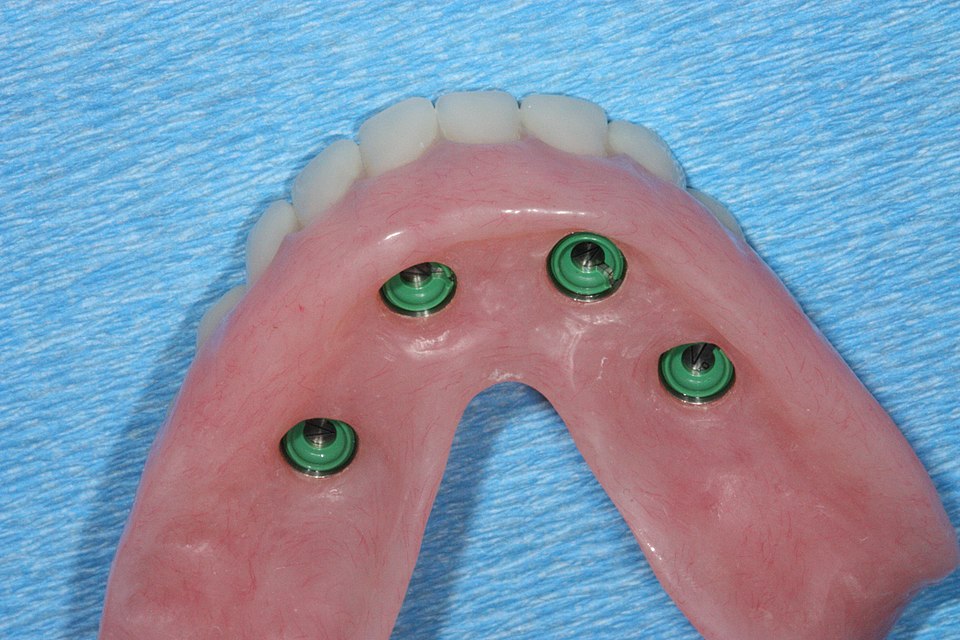
Start with the basic job description. Dental implants replace missing tooth roots with a fixed post placed in the jaw. A replacement tooth, bridge, or denture can then attach to that foundation. The result is usually meant to feel stable and behave more like a natural tooth system. Dentures replace missing teeth with a removable appliance. They sit over the gums and are taken out for cleaning and, in many cases, overnight storage.
That difference sounds small on paper, but it changes almost everything that follows. Implants are built around permanence and support. Dentures are built around removability and flexibility. The Mayo Clinic notes that implant surgery can be helpful when dentures or bridgework fit poorly, and the ADA notes that dentures are an option when someone has lost all or most of their teeth. Those are not competing slogans. They are different design goals.
Here is the simplest way to think about it:
- Implants aim for fixed stability and long-term support.
- Dentures aim for a removable replacement that restores appearance and function without surgery for the replacement itself.
- Implant-supported dentures sit in the middle: a denture that gains extra retention from implants.
That middle category matters. Not every comparison is “all fixed” versus “all removable.” Sometimes the best answer is a hybrid. A lower denture, for example, can be frustrating when it shifts too much. A few implants can change that equation. The mouth has layers. Biology does not love neat marketing boxes.
If you are at the beginning of the decision, do not start with the most expensive option or the one with the most polished brochure. Start with the question of what problem you are solving. Are you replacing one tooth? Several teeth? An entire arch? Are you more concerned about stability, speed, or keeping the plan simple? Those answers determine the lane.
A practical comparison at a glance
When people are trying to compare options, I find a side-by-side matrix is more useful than a long speech. It keeps the decision from drifting into vibes. Vibes are not a treatment plan.
| Category | Dental implants | Dentures | What to compare |
|---|---|---|---|
| Stability | Usually fixed in place once restored | Removable and may shift depending on fit | How much movement is acceptable during daily life? |
| Maintenance | Clean like teeth, plus regular attention to surrounding gums and prosthetic parts | Remove and clean outside the mouth; may need soaking, relining, or adjustment | Which routine will you actually keep up with? |
| Comfort | Often feels closer to natural teeth once healed | Can feel unfamiliar at first and may need adaptation time | How much adjustment time do you want? |
| Eating | Often better for bite force and confidence with a wider range of foods | Can work well, but some foods may require more care | How important is a more natural bite? |
| Speech | Usually less movement once restored | May affect speech until your mouth adapts | Do you need the fastest path to clear speech, or the most stable long-term setup? |
| Timeline | Often requires surgery, healing, and final restoration | Usually faster to fabricate and fit | Is speed or permanence more important right now? |
| Long-term planning | Needs bone and tissue evaluation, plus ongoing maintenance | Needs fit checks, adjustments, and eventual replacement | Which path makes more sense for your health and schedule? |
The table is not here to crown a winner. It is here to make the tradeoffs visible. That is the whole game. If you are trying to decide with confidence, the useful question is not “What does the internet prefer?” It is “What does my mouth need, and what can I realistically maintain?”
Stability, maintenance, and comfort
Stability is the biggest difference most patients notice. Implants are anchored in the jaw, so they are designed to resist the movement that removable teeth can have. Dentures sit on the gums and rely on fit, suction, adhesives, clasps, or implant retention depending on the design. That means dentures can absolutely be useful, but they are not trying to behave like fixed teeth in the same way implants are.
For maintenance, think in terms of workflow. A denture has its own workflow: remove it, clean it, handle it carefully, store it properly, and return for periodic adjustments. The ADA explains that dentures should be cleaned daily and that implant-supported dentures need access to the abutments for cleaning. The ADA’s patient page on denture care and maintenance is useful because it keeps the message plain: these appliances are not set-and-forget objects.
Implants have a different maintenance model. You still brush, floss, and keep up with professional care, but the attention is on both the restoration and the tissues around it. The implant does not mean “no maintenance.” It means “maintenance moves to a different interface.” The hardware is more fixed, but the surrounding biology still needs care.
Comfort is where expectations can drift. A new denture may feel awkward for a few weeks while the tongue and cheek muscles learn the new shape. That is normal, not a failure. The Cleveland Clinic notes that dentures may feel strange at first and that follow-up adjustments are common. Implants, by contrast, usually ask you to tolerate the surgical and healing phase first, then give you a more fixed daily experience later.
So comfort is not just about how something feels on day one. It is about how much adaptation you are willing to do. Some patients are perfectly fine with an appliance they can remove. Others want the least possible mental overhead during the day. One person values predictability. Another values flexibility. Those are legitimate differences, not moral ones.
Eating and speech: the daily-life test
This is where the comparison gets real. A dental choice lives or dies in ordinary life. You do not spend most of your time admiring the treatment. You spend it chewing lunch, talking to people, and forgetting about it when everything is working properly.
Eating is usually the first lifestyle test. Implants are often appealing because they can provide a more natural bite and better confidence with firmer foods. Dentures can still restore function and appearance, but they may require a more deliberate eating style, especially at first. The ADA’s page on missing teeth and the Mayo Clinic’s implant overview both make the same core point: replacing missing teeth matters because function matters. Chewing is not a luxury feature.
That said, function is not the same thing as “same as natural teeth.” Dentures can do a good job, but they may ask more of you. You may need to cut food into smaller pieces, chew more evenly, or avoid certain very sticky or hard items. An implant-supported denture may reduce some of that friction because the denture gains extra retention from the implants, but it still remains a removable design.
Speech is the second test. New dentures can change how words sound until your tongue learns the new contours. That does not mean the denture is wrong; it means the mouth is adapting. Implants are usually less likely to change speech once the final restoration is in place because they are fixed more securely. Still, every mouth is different. Bite, tooth position, tongue space, and arch shape all matter.
If you are asking yourself which option is “best” for eating and speech, I would translate that into more useful questions:
- Do I need the fastest return to daily function, or the most secure result long term?
- How much adaptation am I willing to accept in the first few weeks?
- Do I want a fixed solution, or am I comfortable removing and cleaning the teeth each day?
- Will I be more frustrated by movement, or by the time and cost of a longer process?
Those questions sound simple because they are. The answer often is not. But the questions are still the right ones.
Timeline and planning considerations
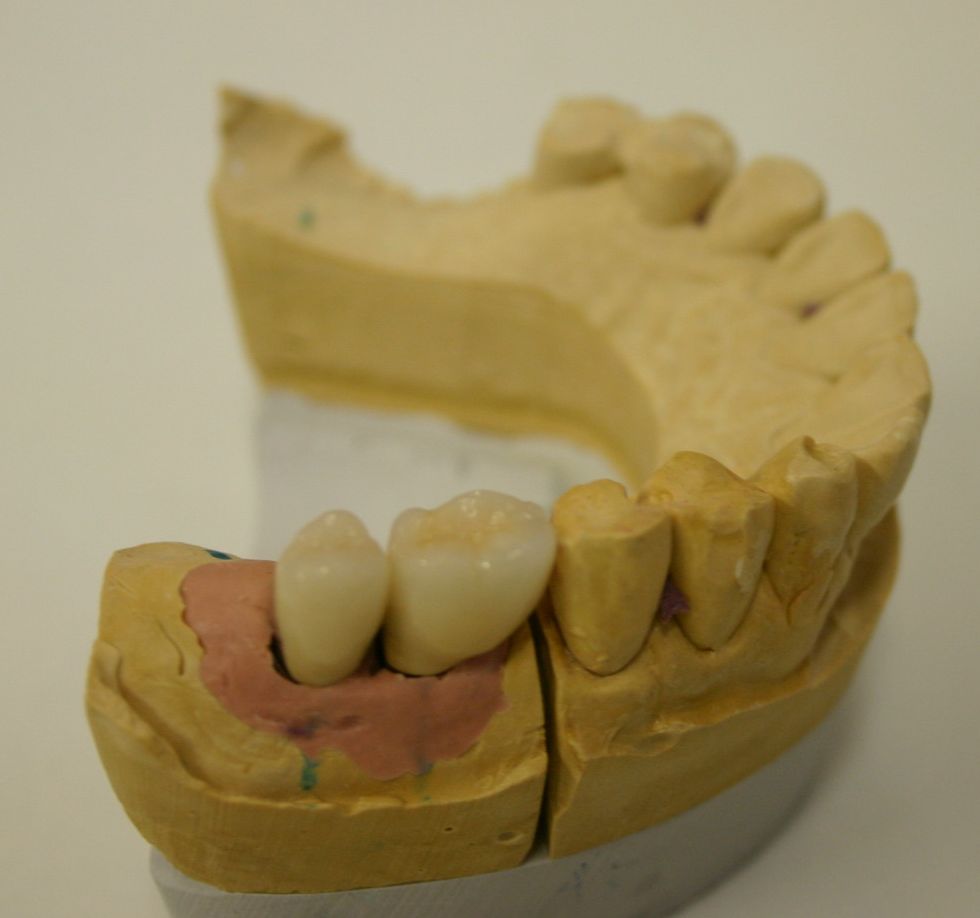
Timeline is often the deciding factor people underestimate. Dentures can usually be planned and fabricated faster than implant treatment, because they do not require the same surgical healing sequence. Implants typically involve an evaluation, imaging or records, placement, healing time, and then the final tooth or denture component. The Mayo Clinic’s implant page explains that the process is staged, not instant.
That does not make implants “slow” in a bad way. It makes them sequenced. Dentistry is full of sequencing. When the order is right, the result holds. When the order is rushed, the result gets expensive in annoying ways.
Here is the practical difference in planning:
- Dentures are usually more immediate in design and delivery.
- Implants usually require a longer runway before final restoration.
- Implant-supported dentures can sit between the two, depending on the plan and healing time.
Planning also depends on what the dentist finds during the exam. Bone volume, gum health, the condition of the remaining teeth, bite forces, and prior dental work can change the sequence. A person with a healthy jaw and good tissue support may move differently than someone who has had years of tooth loss, wear, or instability. That is why one-size-fits-all advice tends to collapse quickly once it meets an actual mouth.
Ask about these planning items before you decide:
| Planning question | Why it matters |
|---|---|
| Do I need extra imaging or records? | Records help determine whether implants are realistic and where a denture will fit best. |
| Is there enough bone support for the implant option? | Bone support influences whether implants are a practical choice. |
| Will I need temporary teeth during healing? | Many patients want to know how they will look and function while the plan is underway. |
| How many visits are likely? | That tells you what the process will demand from your calendar. |
| What follow-up is typical? | Adjustments are part of the plan, not a sign that something went wrong. |
In practical terms, the question is whether you need a faster fit or a more durable architecture. That is the entire board game, just without the cardboard box.
Cost discussion: what to ask instead of guessing
Cost comparisons are often the point where people start comparing numbers without comparing the actual jobs the treatments do. That is a trap. The cheaper option on day one is not always the cheaper option over time, and the more expensive option is not always the smarter one for your specific mouth.
Instead of asking, “Which one costs less?” ask, “What am I paying for, and what may I need to maintain later?” That framing is better because it includes surgery, materials, follow-up visits, adjustments, repairs, and replacement cycles. It also keeps insurance and payment planning in the conversation without pretending every case is identical.
Use this checklist during the cost conversation:
- What is included in the initial treatment plan?
- Are imaging, surgery, lab work, and follow-up visits separate items?
- If I choose dentures, what do maintenance, relines, or future replacement usually involve?
- If I choose implants, what parts of the process are staged over time?
- How do insurance benefits apply, if at all?
- Are payment plans available for either option?
- What costs are likely in year one versus later years?
The ADA’s general guidance on choosing a dentist also applies here in a quieter way: you want a practice that can explain the plan clearly enough that the numbers make sense. Confusion is a cost too. So is a plan you do not fully understand.
The Cleveland Clinic’s dentures guide is helpful because it reminds patients that dentures are not only about the initial fit. They can also involve periodic updates as the mouth changes. That is part of the real comparison. A treatment that is easier to start may ask more from you later. A treatment that takes longer to start may be easier to live with after the fact.
Questions for your consultation
If you want a clean decision, go into the visit with specific questions. Not because you need to sound clever, but because precision prevents expensive misunderstandings. The mouth is not a place for vague optimism. For practices that want to keep consult notes and follow-up reminders in one place, a web app generator can help prototype a lightweight workflow without turning the office into a software project.
- Am I a candidate for implants, dentures, or a hybrid option?
- What are the main reasons you would recommend one option over the other?
- How stable is the supporting bone and gum tissue?
- What would the daily cleaning routine look like for each option?
- How much adaptation should I expect with speech and eating?
- What is the likely timeline from planning to final result?
- What are the likely maintenance steps over the next few years?
- What should I expect if the fit changes later?
- How will this affect my other dental work, if I have any?
- If I am not ready for one option now, what is the best short-term path?
You can also ask a very plain question that tends to reveal the quality of the recommendation: “If this were your mouth, what would you compare before deciding?” A thoughtful clinician will not dodge that. They will explain the tradeoffs in plain English and tell you what matters most in your case.
For people who prefer to prepare before the appointment, the practice’s Our Services page is a useful starting map. If you already know your question is specific, the Send Us an Email page lets you describe the situation in advance so the team can help direct the visit.
How a dentist helps you choose based on your situation
This is where the comparison stops being abstract. A dentist can look at the actual mouth, the available support, the opposing teeth, the bite, and your goals. That matters because the right answer for one person can be a poor answer for another. A 25-year-old missing one tooth, a 68-year-old replacing a full arch, and a patient with active gum disease are not shopping for the same machine.
In a good consult, the dentist is not trying to sell a category. They are trying to solve a specific problem. That means the conversation should include:
- the number and location of missing teeth,
- the health of the gums and supporting bone,
- the condition of neighboring teeth,
- your chewing and speaking priorities,
- your tolerance for surgery and healing time,
- and your willingness to manage daily maintenance.
Once those pieces are clear, the recommendation becomes much less mysterious. Sometimes implants win because the patient wants a fixed solution and the anatomy supports it. Sometimes dentures win because the patient wants a more direct path and the mouth is better suited to a removable appliance. Sometimes the answer is an implant-supported denture because the extra retention changes the experience enough to matter. That is not indecision. That is good planning.
If you want a broader view of replacement options, the ADA’s missing teeth guide is a solid plain-language reference. It keeps the decision grounded in the actual problem: restoring function, appearance, and comfort after tooth loss. The rest is just architecture.
How to make the final call
Here is the short version. Choose based on the combination of stability, timeline, maintenance, and comfort that you can realistically live with. Do not choose purely because one option sounds more modern. Modern is not the same thing as right.
Implants may make sense if you want a fixed feel, are comfortable with a longer plan, and have the support needed for placement and healing. Dentures may make sense if you want a removable solution, need a faster path, or are planning for a situation where a simpler structure is more practical. A hybrid plan may make sense if you want more retention than a conventional denture but do not need or cannot pursue a fully fixed restoration.
That is the core decision framework. The rest is refinement.
If you are still unsure after reading this, that is normal. A good comparison is not supposed to force a decision before an exam. It is supposed to help you ask better questions. The right next step is a consultation that turns the general comparison into a specific recommendation for your mouth, your goals, and your schedule.
Use the Contact Us page if you want help starting that conversation, or send a quick note through Send Us an Email if you prefer to explain your concerns first. The useful question is not whether you should pick the “better” option in the abstract. The useful question is which option will work better in your actual life.
Key takeaways
- Implants are fixed support structures placed in the jaw; dentures are removable replacement teeth.
- Compare stability, maintenance, comfort, eating, speech, timeline, and long-term upkeep.
- Dentures are often faster to plan; implants usually take longer because of surgery and healing.
- Implants may feel closer to natural teeth, while dentures can require more adaptation and fit maintenance.
- Hybrid solutions, including implant-supported dentures, may be the right middle ground for some patients.
- The best choice depends on your mouth, your goals, and what you can realistically maintain over time.
Bottom line: compare the options by how they fit your daily life, not just by how they look on a brochure. If you want a personalized answer, the next move is a dental consultation that can evaluate your anatomy, your goals, and the sequence that makes sense for you.