If veneers are on your mind, the questions usually arrive in a sensible order: How thin are they? How close can the shade come? And what does care actually look like once they are in place? That is the right way to think about it. Veneers can make a smile look more even and more polished, but the planning matters just as much as the final result.
Two reliable starting points are the American Dental Association’s veneer overview and Cleveland Clinic’s dental veneers guide. Both explain the basics clearly: veneers are thin, custom-made shells that can improve the look of teeth with stains, chips, gaps, or uneven shapes. That is also why shade planning, bite checks, and aftercare matter so much. A veneer that looks good on paper still has to work in a real mouth, with real habits, real lighting, and real chewing.
If you want a broader look at cosmetic options before deciding, our Our Services page is a useful place to compare treatments. And if you already know you want a consultation, Contact Us is the simplest next step.
By the end of this article, you should have a clear, practical answer to the main veneer questions: what they can improve, how shade matching is planned, what daily care looks like, and what to do if something chips or feels off.
| Quick question | Practical answer |
|---|---|
| How thick are veneers? | Usually thin, but not identical from case to case. The exact thickness depends on the material, the tooth, and how much contouring is needed. |
| Can veneers match my teeth exactly? | They can be planned to blend well, but a perfect match is not something any honest dentist should promise. |
| Do veneers need special care? | Not exotic care. Good brushing, flossing, routine checkups, and smart habits matter most. |
What veneers can improve
Veneers are often considered when someone wants a smile that looks cleaner, more even, or less worn. They are best known for improving the appearance of discoloration, chips, small gaps, minor shape issues, and uneven edges. In plain language, they are a cosmetic cover for the front of the tooth.
That makes them useful in a few common situations:
| Concern | How veneers may help |
|---|---|
| Stains that do not respond well to whitening | A veneer can create a brighter front surface when whitening alone is not enough. |
| Small chips or worn edges | The veneer can restore a smoother, more even outline. |
| Minor gaps between teeth | Careful shaping can visually narrow small spaces. |
| Teeth that look uneven or misshapen | The visible surface can be rebalanced so the smile looks more consistent. |
That said, veneers are not the answer to every problem. If the issue is mainly decay, gum disease, a bite problem, or heavy wear from grinding, the dentist may need to treat the underlying issue first. Cosmetic work works best when the foundation is steady.
A useful way to think about thickness is this: veneers are meant to be discreet. They are not crowns, and they do not wrap the whole tooth. The tradeoff is that the tooth surface and the final design both matter. A thin veneer can look beautiful, but only if the underlying tooth is prepared and planned with care.
The ADA’s veneer guidance also notes that veneers are different from crowns because they cover only the front surface of a tooth. That difference matters when you are trying to decide whether a conservative cosmetic change is enough or whether a more extensive restoration would be better. The question is not “Which one sounds nicer?” The question is “Which one fits the tooth and the bite?”
How thin is “thin”?
There is no single number that fits every case. A veneer may be very thin in some areas and slightly thicker in others, depending on the shade goal, the amount of space available, and the tooth shape being corrected. Some cases need more room to disguise dark discoloration. Others need less because the tooth already sits in a favorable position and only needs a modest cosmetic improvement.
That is why a consultation should include a conversation about your goals, your bite, and the amount of change you actually want to see. If you want the smile to look lighter but still believable, the final design should respect your face, not fight it.
Shade matching: how we plan it
Shade matching is one of the quiet details that makes or breaks a veneer case. A shade that looks good under office lights can look too bright in daylight. A tooth color that seems balanced in a photo can look different at arm’s length. This is why good planning is not just “pick a white and move on.”
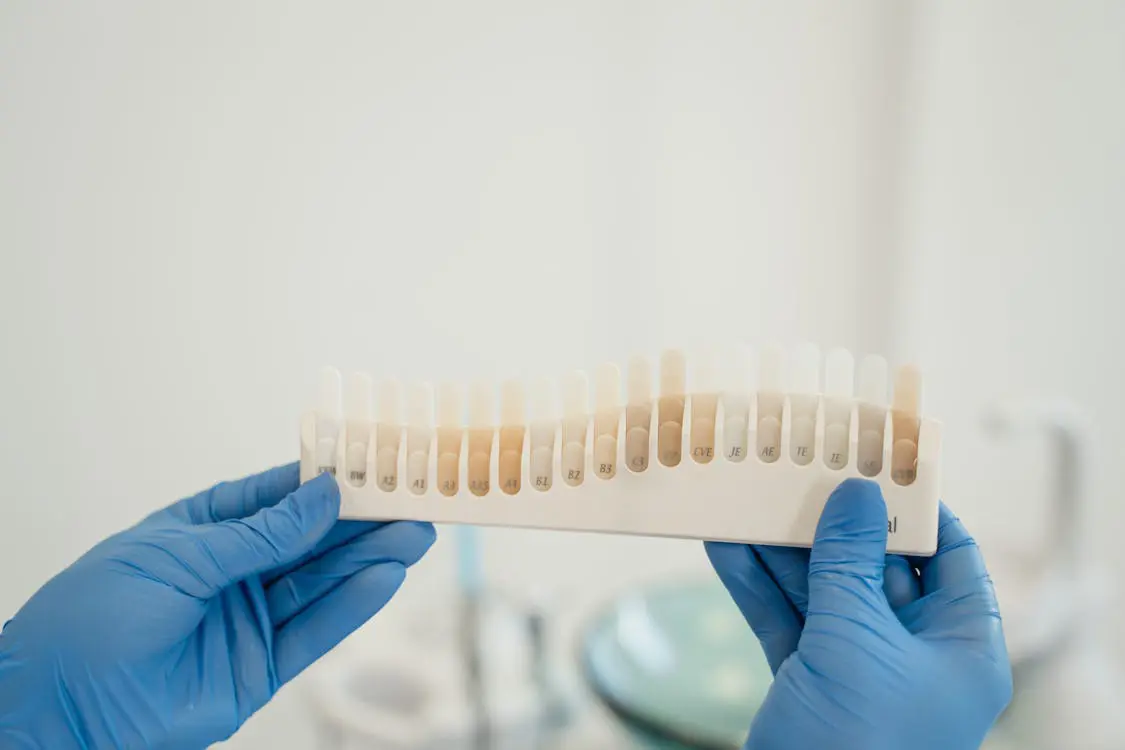
In practice, shade planning often includes several steps:
- Compare the veneer shade to nearby teeth. The goal is not to make the new tooth the brightest object in the room.
- Look at more than color. Shape, translucency, surface texture, and the way light bounces off the tooth matter too.
- Use a shade guide. A physical shade guide gives the dentist and lab a shared starting point.
- Check the result in different light. A shade that works in the operatory should also make sense in daylight and at home.
- Review photographs and, when useful, a mock-up. A temporary preview can help you decide whether the look is too bright, too opaque, or just right.
A review on shade selection in esthetic dentistry explains why this step is still tricky: dental shade matching depends on lighting, observation conditions, and the human eye, which is not a precision instrument. That is not a reason to worry. It is simply a reminder that shade planning should be handled carefully and reviewed more than once.
Here is the practical takeaway: good shade matching aims for harmony, not uniform whitening at all costs. A natural result usually looks like it belongs to the face, the lips, and the neighboring teeth. If you ask for “as white as possible,” a careful dentist may slow that conversation down and ask what kind of whiteness you actually want. That is a good sign, not an obstacle.
One more helpful point: your dentist may suggest whitening the surrounding teeth before veneers are made, especially if the goal is to brighten the whole smile. If whitening is not part of the plan, the veneer shade has to work with the natural teeth beside it. That is why the shade conversation is part science, part judgment, and part listening.
Care basics and daily habits
Once veneers are placed, the care routine should feel familiar. You do not need a dramatic new ritual. You need consistency. The same habits that protect natural teeth also protect the edges and the gumline around veneers.
Daily care usually looks like this:
- Brush twice a day with a soft-bristle toothbrush.
- Use a non-abrasive toothpaste unless your dentist recommends something specific.
- Floss once a day, especially around the veneer margins.
- Keep regular cleanings and exams on the schedule your dentist recommends.
That routine may sound ordinary. Good. Ordinary is where maintenance lives. Veneers do not reward heroics. They reward repeatable habits.
If you want a simple benchmark, think of it this way: clean veneers should not feel sticky, gritty, or oddly rough at the edges. If they do, that is a reason to check in sooner rather than later. Small changes are easier to manage before they turn into bigger ones.
Regular follow-up visits matter for another reason too. The dentist can look for wear, bite changes, gum irritation, and areas where the veneer edge needs attention. The surface may be cosmetic, but the support system around it is mechanical. That support system deserves periodic inspection.
What to avoid
Many veneer problems start with habits that seem harmless in the moment. The trouble is not that veneers are fragile glass ornaments. The trouble is that they are bonded to teeth, and teeth are used all day long. Repeated stress adds up.
These habits deserve caution:
| Habit | Why it matters |
|---|---|
| Grinding or clenching | It can put constant pressure on the veneer and the tooth underneath. |
| Biting ice, pens, or hard candy | Hard pressure can chip the edge or stress the bond. |
| Using teeth as tools | Opening packages or tearing tags is a quick way to create trouble. |
| Very sticky foods | Sticky foods can tug at the restoration and make cleaning harder. |
If you grind your teeth at night, tell the dentist before treatment is finalized. A night guard may be part of the plan. That is not a dramatic detour; it is just common sense. A veneer that survives because the bite was managed well is a better result than a veneer that merely looked good on day one.
For a broader look at smile-improvement choices, MouthHealthy’s smile-improvement guide is a helpful reminder that veneers are only one option among several. Sometimes whitening, bonding, or orthodontic treatment is a better first step. The right answer depends on the tooth, the bite, and the goal.
Sensitivity and adjustment period
It is common to have a short adjustment period after veneers are placed. Teeth may feel a little sensitive to cold or pressure for a while, especially if enamel was adjusted during preparation. The gums may also feel a bit aware of the new edges for the first few days.
That does not automatically mean something is wrong. The mouth notices change. It likes to make a point about it.
What matters is whether the feeling settles down. Mild sensitivity that improves over time is usually part of the normal adjustment process. Ongoing pain, a bite that feels high or uneven, or a sharp edge that keeps catching your tongue is worth a call.
Contact the dentist sooner if:
- pain gets worse instead of better,
- the veneer feels loose,
- your bite feels uneven when you close,
- the gum around the veneer stays irritated, or
- a corner chips or feels rough.
The point of the adjustment period is not to “tough it out.” The point is to notice what is normal and what needs a tune-up. A small bite adjustment or polish can sometimes make a big difference.
Longevity factors
How long veneers last depends on several things at once. Material matters. Placement matters. Care matters. Habits matter. There is no single lifetime number that applies to everyone, and anyone who gives you one without a caveat is selling certainty they do not own.
A PubMed study on porcelain laminate veneers reported strong long-term survival, but it also shows the reality of restorative work: some veneers need re-intervention over time. That is normal dentistry, not failure. The goal is to choose a material and plan that fit your mouth well enough to age gracefully.
In day-to-day terms, longevity usually comes down to this:
- Material quality. Good materials give the dentist and lab more room to work.
- Bite alignment. A balanced bite protects the restoration.
- Oral hygiene. Clean gums and stable margins help everything last longer.
- Habit control. Grinding, chewing ice, and other stressors shorten the odds.
- Routine maintenance. Small repairs and checkups are easier than major fixes.
There is also a human factor that matters: a veneer that fits the patient’s expectations is easier to live with. If someone expects a permanent, maintenance-free miracle, they will be disappointed. If someone expects a well-made cosmetic restoration that still needs care, they are much more likely to be satisfied.
What happens if you chip or break a veneer
If a veneer chips, the first step is simple: do not panic, and do not try to solve it with household glue. That sounds obvious, but people do strange things when they are surprised. Teeth are not a craft project.
What to do instead:
- Rinse gently and keep the area clean.
- Save any loose pieces if you can do so safely.
- Avoid chewing on that side until it is checked.
- Call the dentist and describe what happened.
Depending on the damage, the dentist may smooth a rough edge, repair the veneer, or recommend replacement. The right choice depends on where the chip is, how large it is, and whether the bond is still secure. A tiny surface chip and a full fracture are not the same problem.
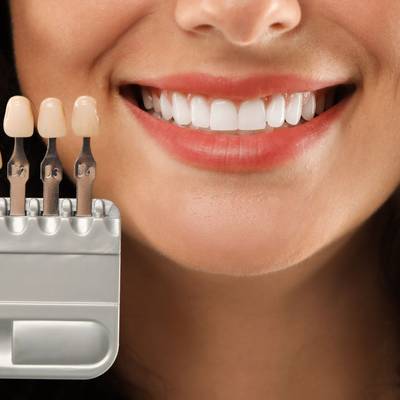
That is one reason mock-ups and try-ins are so useful. They let the dentist and patient look at the proposed shape before the final cementation. The more visible the planning, the less guesswork later. And in dentistry, guesswork is an expensive hobby.
Questions to bring to your consult
Good veneer consults feel conversational, but they are not casual. You are making a decision about tooth structure, appearance, and maintenance. Bring questions. Good questions save time and reduce regret.
- How much tooth structure will need to be changed? This helps you understand how conservative the plan is.
- How will the shade be chosen? Ask whether the dentist uses a shade guide, photos, a mock-up, or a lab consultation.
- What is the plan if I grind my teeth? This is an important question, not an awkward one.
- How do you handle chips or repairs? Knowing the repair path ahead of time is useful.
- What maintenance do you want me to follow? Ask about toothbrushes, flossing, guards, and recall visits.
- What other options should I compare? Bonding, whitening, or aligner treatment may sometimes fit the goal better.
It can also help to ask for examples of similar cases, if the practice shares them, or to review photos of expected outcomes. You are not asking for a promise. You are asking for clarity. That is a fair trade.
If you are still comparing services, our Our Services page gives you a quick way to see how veneers fit alongside other dental treatments. If you are ready to talk through your own situation, Contact Us is the place to start.
Final thoughts
Veneers can do a lot for the right patient, but the best results come from careful planning. Thickness, shade matching, and care are not side notes. They are the whole job, just viewed from different angles.
If you remember only three things, make them these: pick the right case, plan the shade carefully, and protect the result with good habits. That is what keeps a cosmetic decision from becoming a maintenance headache.
If you want personal guidance, the most practical next step is a consultation. Bring your questions, your goals, and a realistic sense of what you want the smile to do for you. A good veneer plan should feel calm, clear, and tailored. Anything less deserves a second look.